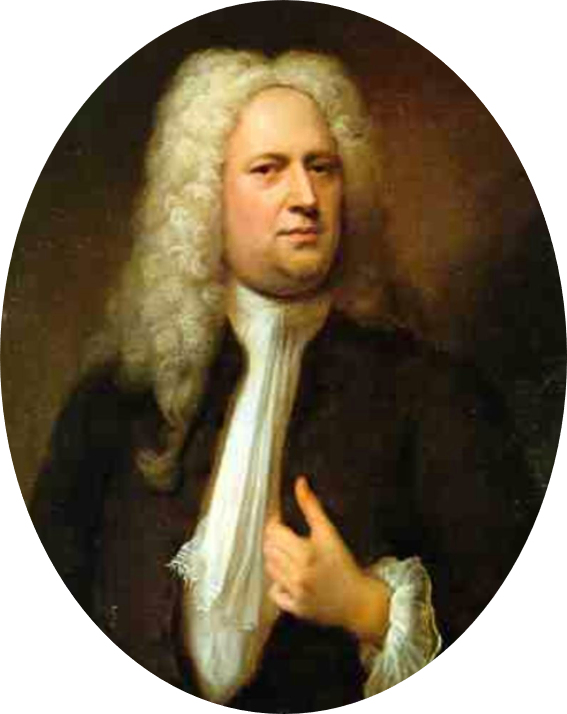
Showing posts with label Handel. Show all posts

2010-10-16

Te Deum and Jubilate


Henry Purcell (1659~1695)
Te Deum and Jubilate Deo in D major, Z. 232
The Choir of Clare College, Cambridge
Timothy Brown (director)
(Uploaded on May 4, 2008 by protestant7, ~12 minutes, 16:9 480p)


European Union Baroque Orchestra - Händel: Te Deum Utrecht, Jubilate Utrecht - Lars Ulrik Mortensen
European Union Baroque Orchestra & Choir of Clare College o.l.v. Lars Ulrik Mortensen
Alex Potter, contratenor

Georg Frideric Händel (1685-1759)
Te Deum 'Utrecht' HWV 278 (1713)
Jubilate 'Utrecht' HWV 279
(Published on Sep 10, 2013 by avroklassiek, 45m13s 16:9 1080p)


The Dettingen Te Deum, Howard Arman conducting 250th death anniversary:
https://youtu.be/LWGEMj70dFw


Te Deum
# English
- - - - - - - - - - - - - - - - - - - - - - - - - - - - - - - - - - -
Henry Purcell George Frideric Handel
Z. 232
1694
Te Deum in D Major
HWV 278
1713
‘Utrecht’
(@Wikipedia, @IMSLP)
HWV 280
1714
‘Caroline’
HWV 283
1743
‘Dettingen’
The Choir of Clare College, Cambridge
Timothy Brown (director)
(11m39s)
Choir of
New College,
Oxford
(14m13s)
EUBO
Mortensen
(~25m)
King
The King’s Consort
The Choir of New College, Oxford
James Bowman, alto
John Mark Ainsley, tenor
Michael George, bass
Robert King, director
(12m12s)
Halle 250th
Arman
(35m49s)
1 We praise thee, O God :
we acknowledge thee to be the Lord.
(Z232/1-Brown)
Z232/1-Brown
(Z232/1-Oxford)
Z232/1-Oxford
(278/1-EUBO)
278/1-EUBO
278/1/ack-EUBO
(278/1/ritornello-EUBO)
(280/1-King)
280/1-King
(1)
1
1/ack
2 All the earth doth worship thee :
the Father everlasting.
Z232/2-Brown Z232/2-Oxford 278/2-EUBO (280/2-King)
280/2-King
(2)
2
3 To thee all Angels cry aloud :
the Heavens, and all the Powers therein.
Z232/3-Brown Z232/3-Oxford (278/3-EUBO)
278/3-EUBO
280/3-King (3)
3
4 To thee Cherubim and Seraphim :
continually do cry,
Holy, Holy, Holy :
Lord God of Sabaoth;
Heaven and earth are full of the Majesty :
of thy glory.
Z232/4-Brown Z232/4-Oxford 278/4-EUBO
278/4/Holy-EUBO
280/4-King (4)
4
4/Holy
4/Lord
4/Heaven
5 The glorious company of the Apostles : praise thee.
The goodly fellowship of the Prophets : praise thee.
The noble army of Martyrs : praise thee.
The holy Church throughout all the world :
doth acknowledge thee;
The Father : of an infinite Majesty;
Thine honourable, true : and only Son;
Also the Holy Ghost : the Comforter.
Z232/5-Brown
Z232/5/The_Father-Brown
Z232/5-Oxford
Z232/The_Father-Oxford
(278/5-EUBO)
278/5-EUBO
(280/5-King)
280/5-King
(5)
5
5/Thine
6 Thou art the King of Glory : O Christ.
Thou art the everlasting Son : of the Father.
Z232/6-Brown Z232/6-Oxford 278/6-EUBO
278/6/Thou-EUBO
(280/6-King)
280/6-King
(6)
6
6/Chorus
7 When thou tookest upon thee to deliver man :
thou didst not abhor the Virgin's womb.
Z232/7-Brown Z232/7-Oxford (278/7-EUBO)
278/7-EUBO
(280/7-King)
280/7-King
(7)
7
8 When thou hadst overcome the sharpness of death :
thou didst open the Kingdom of Heaven to all believers.
Z232/8-Brown Z232/8-Oxford 278/8-EUBO
278/8/Thou-EUBO
280/8-King (8)
8
8/Thou
9 Thou sittest at the right hand of God :
in the glory of the Father.
We believe that thou shalt come : to be our Judge.
Z232/9-Brown Z232/9-Oxford
Z232/9/We-Oxford
278/9-EUBO 280/9-King (9)
9
9/We
Sin Sinfonia Sin
10 We therefore pray thee, help thy servants :
whom thou hast redeemed with thy precious blood.
Z232/10-Brown Z232/10-Oxford (278/10-EUBO)
278/10-EUBO
280/10-King(10)
10
11 Make them to be numbered with thy Saints :
in glory everlasting.
[added later, mainly from Psalm verses:]
O Lord, save thy people :
and bless thine heritage.
Govern them : and lift them up for ever.
Z232/11-Brown
Z232/11/O-Brown
Z232/11-Oxford
Z232/11/O-Oxford
278/???-EUBO 280/11-King
280/11/O-King
11
11/O_Lord
12 Day by day : we magnify thee;
And we worship thy Name : ever world without end.
Z232/12-Brown Z232/12-Oxford (278/12-EUBO)
278/12-EUBO
278/12/And-EUBO
(280/12-King)
280/12-King
(12)
12
12/And
13 Vouchsafe, O Lord : to keep us this day without sin.
O Lord, have mercy upon us : have mercy upon us.
O Lord, let thy mercy lighten upon us :
as our trust is in thee.
Z232/13-Brown Z232/13-Oxford (278/13-EUBO)
278/13-EUBO
(278/13/ritornello-EUBO)
280/13-King (13)
14 O Lord, in thee have I trusted :
let me never be confounded.
Z232/14-Brown Z232/14-Oxford 278/14-EUBO

278/End_of_performance-EUBO

279/Utrecht_Jubilate-EUBO

279/Glory-EUBO
280/14-King (14)
14
Performing forces in the Halle 250th Commemoration Concert:
Ulrike Fulde, soprano
Albrecht Sack, tenor
Felix Plock, bass
Hallenser Madrigalisten
MDR Rundfunkchor
Händelfestspielchor
Chor der Oper Halle

The English Concert
Händelfestspielorchester Halle
Howard Arman, conductor

Recorded live from Marktkirche, Halle on 14 April 2009.


Notes on the Henry Purcell Te Deum in D Major, Z. 232:

That Henry Purcell was one of the greatest English composers
was a fact affirmed in his lifetime.
His position as the court composer
for first James II, then William III, and finally Queen Mary
enabled him to write music for the most important court functions
with the best possible performers under the finest possible circumstances.
His Te Deum and Jubilate Deo is one of his last works of church music
and, indeed, one of his last works.
Written for St. Cecilia's Day, November 22, 1694,
and scored for soloist, mixed choir, and an orchestra of
trumpets, drums, strings, and continuo,
it is one of Purcell's grandest and most ornate works.
Setting the Ambrosian hymn in English,
Purcell conceived his Te Deum and Jubilate Deo
as a sort of English celebratory cantata
with arias, duets, and trios alternating with
choruses and highly embellished instrumental passages.
Although there are meditative and even melancholy sections of the work,
its overall tone is joyous from its festive opening chorus
to its serene and sublime closing Jubilate Deo.
[allmusic.com]


European Union Baroque Orchestra - Händel: Te Deum Utrecht, Jubilate Utrecht - Lars Ulrik Mortensen
European Union Baroque Orchestra & Choir of Clare College o.l.v. Lars Ulrik Mortensen
Alex Potter, contratenor

Georg Frideric Händel (1685-1759)
Jubilate 'Utrecht' HWV 279
(Published on Sep 10, 2013 by avroklassiek, 45m13s 16:9 1080p)


(HD) Handel: Glory be to the Father, HWV 279 Jubilate from the Utrecht Te Deum
The English Concert, Howard Arman
(Published on Mar 2, 2015 by Die Verwandlung, 16:9 720p HD 5m)


Jubilate Deo (Psalm 100)
# Coverdale translation of Psalm 100,
followed by the Gloria Patri (in English)
George Frideric Handel
HWV 279
1713
‘Utrecht’ Jubilate
(@Wikipedia, @IMSLP)
Scoring EUBO
Mortensen
2013
Halle
Arman
2009
(Gloria Patri
only)
1a O be joyful in the LORD, all ye lands: alto, SATB (279/1a-EUBO)
279/1a-EUBO
1b serve the LORD with gladness,
and come before his presence with a song.
SSATB 279/1b-EUBO
2 Be ye sure that the LORD he is God;
it is he that hath made us, and not we ourselves;
we are his people, and the sheep of his pasture.
duet: alto, bass, violin, oboe (279/2-EUBO)
279/2-EUBO
3 O go your way into his gates with thanksgiving,
and into his courts with praise;
be thankful unto him, and speak good of his Name.
SATB, strings 279/3-EUBO
4 For the LORD is gracious, his mercy is everlasting;
and his truth endureth from generation to generation.
Adagio: 2 altos, bass, oboes, violins (279/4-EUBO)
279/4-EUBO
5 Glory be to the Father,
and to the Son,
and to the Holy Ghost.
SSAATTBB (279/5-EUBO)
279/5-EUBO
(279/5-Arman)
279/5-Arman
6 As it was in the beginning,
it is now and ever shall be,
world without end.
Amen.
SSATB 279/6-EUBO
279/End_of_performance-EUBO
279/6-Arman


Charpentier & Lully: Te Deum | Le Poème Harmonique
Published on Jun 30, 2014 by Oedipus Coloneus

03:36 • Charpentier: Te Deum, polyphonic motet in D major, H 146
__

03:36 • Prelude: Marche en rondeau
04:53 • Te deum laudamus: bass solo
05:54 • Te aeternum patrem: chorus and SSAT solo
07:42 • Pleni sunt caeli et terra: chorus
09:51 • Te per orbem terrarum: trio, ATB
13:47 • Tu devicto mortis aculeo: chorus, bass solo
15:00 • Te ergo quaesumus: soprano solo
17:35 • Aeterna fac cum sanctis tuis: chorus
19:55 • Dignare, domine: duo, SB
23:30 • In te domine speravi: chorus with ATB trio
__

30:18 • Lully: Te Deum, for double chorus and orchestra, LWV 55
__

30:18 • Symphonie - Te deum laudamus
37:21 • Patrem immensae majestatis
44:10 • Tu ad dexteram dei sedes
48:47 • Salvum fac populum tuum
53:11 • Dignare domine
59:32 • In te domine speravi
__

• Amel Brahim-Djelloul: soprano
• Claire Lefilliatre: soprano
• Jean-François Lombard: countertenor
• Mathias Vidal: tenor
• Geoffroy Buffière: bass

Le Poème Harmonique & Les Cris de Paris
Conducted by Vincent Dumestre


2010-04-28

George Frideric Handel


1685–1759


George Frideric Handel 1685–1759


List of compositions by George Frideric Handel

The Messiah has a dedicated webpage. Click here for it.

gfhandel.org
American Handel Society

Essays by Dr. Derek Alsop:


Handel Edition:
Handel Edition Volume 1 (William Christie) - Alcina, Orlando
Handel Edition Volume 2 (Marc Minkowski) - Il Trionfo del Tempo, Teseo, Amadigi
Handel Edition Volume 3 (John Eliot Gardiner) - L'Allegro, Il Penseroso ed il Moderato, Tamerlano, Alcina, Il Pastor Fido, Terpsichore
Handel Edition Volume 4 (Raymond Leppard) - Samson, Messiah & Arias from Rinaldo, Serse etc
Handel Edition Volume 5 (John Eliot Gardiner) - Semele, Israel in Egypt, Dixit Dominus, Zadok the Priest, La Resurrezione, The Ways of Zion do Mourn
Handel Edition Volume 6 (Nikolaus Harnoncourt) - Belshazzar, Jephtha
Handel Edition Volume 7 (Nikolaus Harnoncourt) - Saul, Alexander's feast, Ode for St Cecilia's Day, Utrecht Te Deum, Apollo e Dafne, Giulio Cesare
Handel Edition Volume 8 (William Christie) - Acis and Galatea, Theodora, Agrippina condotta a morire, Armida abbandonata, La Lucrezia
Handel Edition Volume 9 (Nikolaus Harnoncourt) - Orchestral Music
Handel Edition Volume 10 (Ton Koopman) - Organ & Harpsichord Music


Händel: Celebration | Freiburg baroque orchestra & Age of enlightenment (2007 Proms concert)
02:34 • Music for the royal fireworks
24:28 • Eternal source of light divine
28:12 • Love Sounds th'alarm
34:52 • Concerto a due cori in F major
52:38 • As steals the morn upon the night
59:20 • Happy we!
• Kate Royal: soprano
• Ian Bostridge: tenor
Freiburg baroque orchestra
Orchestra of the age of enlightenment
Conductors: Gottfried von der Goltz & Rachel Podger
Published on Oct 28, 2012 by Simon Birch
(1:13:50 16:9 480p)


Handel 250 Years - Halle Concert / The English Concert
(arteLIVE broadcast with commentary in French, 1h59m55s, La Casa di Davide upload 2014-03-03)

(click here for music start)

Ulrike Fulde, soprano
Albrecht Sack, tenor
Felix Plock, bass
The English Concert
Conductor: Howard Arman
Marktkirche in Halle, the church where Handel was baptized
2009

0. conductor enters
1. Zadok the Priest, HWV 258
“Zadok”
“The people rejoiced”
“God save the King”
2. Esther, HWV 50a: Sinfonia

Commentary in French
3. "The ways of Zion do mourn", HWV 264, Funeral Anthem for Queen Caroline (excerpt)
Their bodies are buried in peace.
4. Saul, HWV 53 Death March

Commentary in French
Arman returns
5. The “Glory” from the “Utrecht” Jubilate, HWV 279
“Glory be to the Father”
“As it was in the beginning”

Commentary in French
Arman returns
6. Israel in Egypt, HWV 54 (excerpts)
“The Lord shall reign for ever and ever”

“And Miriam the prophetess”
“Sing ye unto the Lord”

Commentary in French
Arman returns
7. Saul, HWV 53 Sinfonia
8. Chandos Anthem HWV 249b Psalm 96 “O sing unto the Lord a new song”
Symphony, O sing unto the Lord, Declare, The waves of the sea, O worship the Lord, Let the whole earth stand in awe of him, Let the heavens rejoice

Commentary in French
Arman returns
9. Dettingen Te Deum, HWV 283: We praise Thee, oh God

Commentary in French
Arman returns
10. Reprise of the “Glory” from the “Utrecht” Jubilate, HWV 279
“Glory be to the Father”
“As it was in the beginning”

Closing_credits


The opening concert of the Handel Special Day,
a collaboration of 40 broadcasters.
Four choirs and two orchestras reconstructed a memorial concert,
held for the composer in 1784 in Westminster Abbey.

The text for the Israel in Egypt excerpt:
35. Doubled Chorus
The Lord shall reign for ever and ever.
(Exodus xv: 18)

0:40 36. Recitative (tenor)
For the horse of Pharaoh went in with his chariots and with his horsemen into the sea,
and the Lord brought again the waters of the sea upon them;
but the children of Israel went on dry land in the midst of the sea.
(Exodus xv: 19)

1:04 37. Double Chorus
The Lord shall reign for ever and ever.
(Exodus xv: 18)

1:45 38. Recitative (tenor)
And Miriam the prophetess, the sister of Aaron, took a timbrel in her hand;
and all the women went out after her with timbrels and with dances.
And Miriam answered them:
(Exodus xv: 20, 21)

2:05 39. Solo and Double Chorus
Soprano:
Sing ye to the Lord, for He hath triumphed gloriously;
Choir:
The Lord shall reign for ever and ever.
Soprano:
The horse and his rider hath He thrown into the sea.
Choir:
The Lord shall reign for ever and ever.
For He hath triumphed gloriously.
The horse and his rider hath He thrown into the sea.

full Israel in Egypt libretto


The 2009 BBC Proms concert commemorating the 250th anniversary of Handel’s death:
• Solomon: Arrival of the Queen of Sheba
• Coronation anthem: Let thy hand be strengthened
• Semele: Endless pleasure, endless love
• Semele: My racking thoughts
• Semele: O ecstasy of happiness! Myself I shall adore
• Coronation Anthem: The king shall rejoice
• Concerto for organ in F major
• Coronation Anthem: Zadok the priest

Carolyn Sampson: soprano
Alastair Ross: organ

The Sixteen
Conducted by Harry Christophers


Handel sacred music
view playlist


Funeral Ode for Queen Caroline: view playlist


The Dettingen Te Deum, Howard Arman conducting 250th death anniversary:
720p HD from Die Verwandlung, 480p from La Casa di Davide
Click here to put the Te Deum text in the text box below the video screen

@Wikipedia
Text of the Te Deum:

We praise thee, O God :
we acknowledge thee to be the Lord.

All the earth doth worship thee :
the Father everlasting.

To thee all Angels cry aloud :
the Heavens, and all the Powers therein.

To thee Cherubim and Seraphim :
continually do cry,
Holy, Holy, Holy :
Lord God of Sabaoth;
Heaven and earth are full of the Majesty :
of thy glory.

The glorious company of the Apostles : praise thee.
The goodly fellowship of the Prophets : praise thee.
The noble army of Martyrs : praise thee.
The holy Church throughout all the world :
doth acknowledge thee;
The Father : of an infinite Majesty;
Thine honourable, true : and only Son;
Also the Holy Ghost : the Comforter.

Thou art the King of Glory : O Christ.
Thou art the everlasting Son : of the Father.

When thou tookest upon thee to deliver man :
thou didst not abhor the Virgin's womb.

When thou hadst overcome the sharpness of death :
thou didst open the Kingdom of Heaven to all believers.

Thou sittest at the right hand of God : in the glory of the Father.
We believe that thou shalt come : to be our Judge.

We therefore pray thee, help thy servants :
whom thou hast redeemed with thy precious blood.
Make them to be numbered with thy Saints : in glory everlasting.

[added later, mainly from Psalm verses:]
O Lord, save thy people :
and bless thine heritage.
Govern them : and lift them up for ever.

Day by day : we magnify thee;
And we worship thy Name : ever world without end.

Vouchsafe, O Lord : to keep us this day without sin.
O Lord, have mercy upon us : have mercy upon us.
O Lord, let thy mercy lighten upon us :
as our trust is in thee.

O Lord, in thee have I trusted :
let me never be confounded.


(HD) Handel: Glory be to the Father, HWV 279 Jubilate from the Utrecht Te Deum
The English Concert, Howard Arman
(Published on Mar 2, 2015 by Die Verwandlung, 16:9 720p HD 5m)


Glory be to the Father, Utrecht Te Deum, Arman
or an embed:


Utrecht Te Deum, Netherlands Bach Society, Jos van Veldhoven


Dixit Dominus playlist
Dixit Dominus text, with links to a performance
@ Wikipedia (includes text)

Marc Minkowski, Les Musiciens Du Louvre 1999 performance


Uploaded on Dec 15, 2010 by conservatoriovicenza, 35m15s
Esecuzione del Coro e Orchestra barocca del Conservatorio di Vicenza presso il Tempio di San Lorenzo.
Direttore Paolo Faldi


“He spake the word”, “He gave them hailstones”, “He sent a thick darkness”


Just the “Hallelujah, Amen”. But why not hear it again :-)

Judas Maccabaeus selections, La Capilla Real de Madrid, 1h29m


view playlist


Handel’s Ode for Saint Cecilia’s Day @Wikipedia; Movements; Texts
Handel: Ode for St. Cecilia's Day -- Trevor Pinnock YouTube playlist
St. Cecilia : THE ENGLISH CONCERT AND CHOIR - Trevor Pinnock (51 minute video)
St. Cecilia : Paul Agnew, Les Arts Florissants (52:04 video)

Coronation Anthems, St. Cecilia : Paul Agnew (1:21:28 video)
Movement 2.
“From harmony …
Through all the compass of the notes it ran …”
Movements 4-6, including
“The trumpet’s loud clangor excites us to arms …
The double double double beat of the thundering drum …”
Movements 9-11. The best part is highlighted by the memorable rhythmic beat of
“The dead shall live, the living die.”
Also:
Handel: Ode for St Cecilia's Day
Les Musiciens du Louvre
Conducted by Marc Minkowski

Place the text for the ode in the box below or in a new window.

Another performance of Handel's beautiful Ode for Saint Cecilia:
Handel: Ode for St. Cecilia's Day by Les Arts Florissants
Conducted by Paul Agnew

Handel: Ode for St. Cecilia's Day by Les Arts Florissants
Conducted by Paul Agnew


Handel Instrumental Music

Water Music @Wikipedia
Handel - Water music - English Baroque Festival
Published on Jun 26, 2012 by Khang Nguyễn


Royal Fireworks Music 12m25s Badinage


Handel Cantatas

Published on May 27, 2013 by Geoffroy de Longuemar
Georg Friedrich Haendel (1685 - 1759) -
Cantates sacrées pour soprano, deux violons et basse continue :
Salve Regina,
O qualis de coelo sonus,
Trio sonata en Sol mineur,
Coelestia dum spirat aura,
Laudate pueri (Psaume 112) -
London Baroque, Charles Medlam, violoncelle et dir.,
Emma Kirby, soprano,
Ingrid Seifert & Richard Gwilt, violons, Terrence Charlston, clavecin et orgue.


Handel Operas

See my dedicated web page to these fine works!


Handel Oratorios

See my dedicated web page to these fine works!


Dixit Dominus Corboz video timings:
1 Dixit (00:00) 00:45 ,, 2 Virgam virtutuis (6:11) 6:30 ,, 3 Tecum principium (9:00) 9:15 ,, 4 Juravit Dominus 12:05 ,, 5 Tu es sacerdos in aeternum 14:16 ,, 6 Dominus a dextris (15:55) 16:20 ,, 7 Judicabit 19:48 ,, 8 Conquassabit 22:11 ,, 9 De torrente (23:35) 24:04 ,, 10 Gloria Patri (28:04) 28:15

Dixit Dominus Gardiner video timings:
2 Virgam virtutis tuae 5:40, 3 Tecum principium 8:45, 4 Juravit DOMINUS 11:55, 5 Tu es sacerdos 14:35, 6 Dominus a dextris tuis 16:01, 7 Judicabit in nationibus 19:07, 8 Conquassabit 21:35, 9 De torrente 23:04, 10 Gloria Patri 27:20 ;;; Encore "De torrente" 37:35; final ovation 42:00


HWV 263 "Sing unto God" Wedding Anthem for Prince Frederick 1736
Nonesuch H-71294A
Handel "Sing unto God" (HWV 263, 1736) (Glad your vinyl still sounds so good! All my vinyls (and I had many, including Nonesuch, from that period) suffered from inner-groove distortion after frequent playings.)

00:48
(Alto Soloist, Full Chorus, Orchestra including timpani and solo trumpeter)
Sing unto God, ye Kingdoms of the Earth
O sing Praises unto the Lord.

(3:52) 4:17
(Soprano soloist, orchestra)
Blessed are all they that fear the Lord:
O well is thee, and happy shalt thou be.

(6:30) 6:55
(Bass soloist, obbligato cello and orchestra)
Thy wife shall be as the fruitful vine
Upon the walls of thine house
Thy children like the olive branches
Round about thy table.

10:18
(Fugal chorus with orchestra)
Lo, thus shall the man be blessed
That feareth the Lord
Blessed shall he be
He shall be blessed.

12:33
(Tenor soloist, recitative with continuo instruments)
Blessed be the Lord God of Israel
13:21
From everlasting to everlasting.

(13:42) 13:59
(Tenor Soloist, Full Chorus, Orchestra including timpani and solo trumpeter)
And let all the people say
Hallelujah, amen.
15:25
Blessed be the lord, Hallelujah, amen.
15:42 , 16:08
Praise ye the Lord, Hallelujah, amen.
17:11
Blessed be the Lord
17:14
From everlasting to everlasting.
Amen, Hallelujah, amen.

Handel opera

This post has two parts:
The chapter on Handel’s operas from the book version of
the article (by Winton Dean) on Handel in the first, 1980, edition of The New Grove, and
an expanded version of the Wikipedia table of Handel’s operas.


Here is the chapter on Handel’s operas from the book version of
the article (by Winton Dean) on Handel in the first, 1980, edition of The New Grove.


[1]
It is only [since 1920] that Handel’s operas have been rediscovered;
apart from a fragment of Almira reduced to one short act (1878),
none was staged anywhere between 1754 and 1920.
They were regarded as dead along with the opera seria convention
to which they subscribed.
It is true that Handel did not reform or break out of that convention,
with its concentration on recitative and da capo aria,
an occasional duet, and a happy end expressed in an ensemble or coro,
to the extent that Gluck did.
The way he made it work in the theatre could not be demonstrated
until modern producers discovered how the 18th-century stage operated:
it worked by exploiting its peculiarities and limitations,
such as the single rise and fall of the curtain
at beginning and end of the opera
and the quick scene changes executed in full view of the audience,
and relating them to the musical structure in such a way
as to play on and defeat the listener’s expectation.

[2]
In a narrowly circumscribed convention
a slight deviation can achieve a disproportionate effect.
By manipulating the shape of the da capo aria
and in particular
varying the incidence, length, texture and regularity of the ritornellos
at the beginning and end of the main sections (and in the middle),
and by associating such strokes with a point of drama or character,
he turned the most static of forms into something potentially dynamic.
The number of different designs he created by this means,
with the aid of contrasts in tempo, metre, rhythm and key,
is almost beyond counting;
in extreme cases, such as ‘Deggio dunque’ in Radamisto,
he could deceive the ear into thinking that
the da capo form had been abandoned altogether.
The next step was to give a cumulative dynamic thrust to a scene,
an act and whole opera by so placing the arias
that they build up the characters facet by facet
and at the same time draw taut the dramatic conflict.
Handel did this partly by long-term contrasts of mood and pace
and partly by tonality.
When a slow chromatic aria in the minor
follows several quick pieces in the major,
perhaps with a radical change of scoring,
its impact is greatly enhanced,
especially if it occurs at the point of maximum weight at the end of an act.
Handel sometimes built a whole opera round one tonal centre (Imeno)
and associated characters with particular keys (Cleopatra, Antigone in Admeto);
he regularly pointed a switch of dramatic emphasis by a shift in tonal direction.
That was his almost invariable method of marking a change of scene;
the visual transformation of the sets is reflected in the music.
Such a method depends for success on a coherent and workmanlike libretto
(there is evidence that, at least in the Royal Academy years,
Handel exercised firm control over this)
and on the composer’s ability to deploy an exceptional fund of musical invention
in the arias themselves.
It does not take many weak links to break the chain.
Handel’s greatest operas contain so few inferior or superfluous arias
that they are difficult to cut without damage to the structure.

[3]
In some respects Handel did loosen the convention.
He carried the accompanied recitative
to an elaboration and an intensity of emotion
it had never attained before
[Really?
More intense than the plea and lament of Orpheus in Monteverdi’s Orfeo?]

and was not to reach again until Mozart or even later.
In the remarkable episodes of Bajazet’s suicide in Tamerlano and Orlando’s madness,
where simple and accompanied recitative, arioso and aria are intermingled,
the forward drive of the drama takes control and dictates new musical forms.
Elsewhere Handel allowed a character to interrupt another’s aria
or quote it back at him ironically in a different context.
Act 1 of Metastasio’s Poro libretto ends with
a scene in which two estranged lovers do this simultaneously,
each in a mood of disillusionment citing the other’s earlier vow of constancy.
Handel’s setting works the two arias together as an extended duet
that marvelously combines irony, deft counterpoint and lyrical beauty.
Handel exploited the conventional exit after an aria by building up to it:
beginning a scene with a slow or pensive one-part aria (arioso),
followed by a recitative that transforms the dramatic situation
and a full aria for the same character discharging the accumulated emotion,
he evolved the cavatina-cabaletta design of Romantic opera.
He sometimes defeated an unconvincing happy end
by setting the coro to tragic music, regardless of the words,
where the losing cause won his sympathy
(for example in Amadigi, Tamerlano and Imeneo).
With increasing frequency, especially after 1725,
he linked the coro with one or more preceding movements,
whether arias, dances or ensembles, by means of common thematic material,
an anticipation of the extended finales of subsequent practice.
In some of the later operas
(Ariodante, Alcina, the third version of Il pastor fido)
he used a genuine chorus and a ballet;
his integration of these resources and the important element of spectacle
in the dramatic action should, in a sensitive production,
make an immediate appeal to a modern audience.

[4]
Once he had achieved maturity in Agrippina
Handel’s operatic style changed little in 30 years,
apart from the assimilation of new influences already mentioned.
At all periods he wrote operas of different types.
The commonest, as in all 18th-century opera seria,
is heroic in temper with a plot taken from
Roman or Greek history or occasionally from mythology or the Dark Ages.
The characters are concerned with
love, jealousy, dynastic rivalry and the grasp of power;
though they often utter lofty sentiments, their politics are purely personal
(no representative of the common people appears).
This type of libretto became standardized in the work of Metastasio,
a great poet whose artificial symmetry and literary refinement,
though immensely popular with composers (and singers)
who did not look beyond the confines of the aria,
eventually blocked the progress of opera as an art and demanded the surgery of Gluck.
Handel’s three Metastasio operas (Siroe, Poro and Ezio)
show him inspired by the poetry
but inhibited by the stiffness of the characters.
In his finest heroic operas
plot, characters and musical invention are perfectly matched;
the three masterpieces of 1724-5, Giulio Cesare, Tamerlano and Rodelinda,
far surpass the work of any contemporary.

The ‘magic operas’, though only five in number,
are an important and distinctive class;
two of them, Orlando and Alcina,
are among the supreme examples of the form,
and the other three (Rinaldo, Teseo and Amadigi)
contain much superb music, especially in the scenes of sorcery and witchcraft.
The supernatural element reduced the need for the plot to assume a rational course,
admitted the poetic symbolism of the fairy tale,
and released the romantic strain on Handel’s imagination.
The much prized machinery of the Baroque theatre came into its own
in the spectacular transformation scenes.

[5]
A third type of opera embraces serious emotion,
comic or even farcical situations and an element of parody,
mocking the conventions of opera seria (including the castrato hero);
these anti-heroic works,
especially Agrippina, Flavio, Partenope and Serse,
distil a characteristic and individual flavor.
The ability to suggest the profound, the commonplace
and the ridiculous aspects of human behavior,
not only in the same opera but in the same scene and situation,
places Handel beside Monteverdi and Mozart
as a master of dramatic irony on many levels.
The spirit of playful comedy is not absent from Handel’s most serious operas:
Asteria twits her lover’s apparent faithlessness in Tamerlano,
Cleopatra turns her brutal and lascivious brother into a figure of fun,
and Alexander the Great’s duplicity is hilariously exposed
when each of the two women he is courting, having overheard his advances to the other,
quotes back at him in a different key the love music he addressed to her rival.
This comprehensiveness of mood and dramatic approach
gives his operas a depth seldom attained in the history of the art.
But their quality can emerge only from productions based
on a complete understanding of the convention.


[The following sentence is not from the book quoted from above,
but is from the introduction (page 7) by Donald Burrows of
The Cambridge Companion to Handel:]


A good preparation for attendance
at a performance of one of Handel’s operas written for London
is to read through the dual-language libretto
that was printed for the work’s first performance.
[Endnote: The original printed wordbooks have been re-published in facsimile in
Ellen T. Harris (ed.), The Librettos of Handel’s Operas,
fascimilie edition with introductions
(13 vols., New York and London, 1989).]

[That 13 volume edition is hardly easily accessible to most people.
I have tried, rather assiduously, to find on the Internet (as of 2013-08)
English translations of the librettos for
the various Handel operas that I have included in this blog.
The Italian original librettos are generally available in an excellent edition from www.haendel.it,
but as far as I can find there is no source for the English translations.
I would think that a nation as wealthy as the United States could somehow find the money
to put English translations of this cultural treasure on the Internet,
where it could be available for all,
but evidently that does not fit within the budgets of those who fund America's cultural scene
(e.g., the National Endowment for the Arts and
the various foundations and institutions which promote American culture).


The following table started as a copy of the one at Wikipedia as of 2013-02-19,
but was expanded by adding links to my posts on various operas,
and with embeds of videos
when those were available but I had no dedicated post on the subject.


Operas by George Frideric Handel
HWV Title
- - - - - - - - - - - - - - - -
Libretto
- - - - - - - - - - - - - - - -
Première date
- - - - - - - - - - - -
Première place, theatre
- - - - - - - - - - - -
Modern revival
- - - - - - - - - - - - - - - -
Notes
- - - - - - - - - - - - - - - - - - - -
Videos
1 Almira (Der in Krohnen erlangte Glücks-Wechsel, oder: Alimira, Königin von Castilien) Friedrich Christian Feustking, after Giulio Pancieri 8 January 1705 Hamburg, Theater am Gänsemarkt 4 June 1994, Handel Festival, Bad Lauchstädt Some music lost; announced as a Singspiel but has no spoken dialogue BEST OF CLASSICAL MUSIC 2016-07-14 (3:44:26)
2 Nero (Die durch Blut und Mord erlangete Liebe) Friedrich Christian Feustking 25 February 1705 Hamburg, Theater am Gänsemarkt   Music lost
3 Florindo (Der beglückte Florindo) Hinrich Hinsch January 1708 Hamburg, Theater am Gänsemarkt   Almost all of the music is lost
4 Daphne (Die verwandelte Daphne) Hinrich Hinsch January 1708 Hamburg, Theater am Gänsemarkt   A sequel to Florindo, intended to be performed on the day after it. Almost all of the music is lost
5 Rodrigo (Vincer se stesso è la maggior vittoria) After Francesco Silvani's II duello d'Amore e di Vendetta

Italian libretto
c, November 1707 Florence, Teatro di via del Cocomero 1984, Innsbruck Some music is lost BEST OF CLASSICAL MUSIC 2016-07-15 (2:36:53)
6 Agrippina Vincenzo Grimani 26 December 1709, early 1710 Venice, Teatro San Giovanni Grisostomo 1943, Halle   http://kwhmusic.blogspot.com/2009/02/handel-agrippina.html
7a/b Rinaldo Giacomo Rossi/Aaron Hill, after Tasso, La Gerusalemme liberata

Italian libretto
24 February 1711 London, Queen's Theatre June 1954, Handel Festival, Halle HWV 7b is the 1731 revision; the libretto of a revision of 1717 also exists http://kwhmusic.blogspot.com/2009/02/handel-rinaldo.html
8a/b/c Il pastor fido Giacomo Rossi, after Giovanni Battista Guarini

8b Italian libretto, 8c Italian libretto
22 November 1712 London, Queen's Theatre 20 June 1948, Handel Festival Göttingen (third, November 1734 version); 14 September 1971, Abingdon, (first, 1712 version) HWV 8c designates the version of May 1734 and its November revival. The prologue Terpsicore added to the November 1734 revival is 8b.
9 Teseo Nicola Francesco Haym, after Philippe Quinault's libretto for Thésée

Italian libretto
10 January 1713 London, Queen's Theatre 29 June 1947, Handel Festival Göttingen 5 acts
10 Silla Giacomo Rossi, after Plutarch's Life of Sulla

Italian libretto
2 June 1713? London, Queen's Theatre? (or Burlington House?)   Much of the music was re-used in Amadigi BEST OF CLASSICAL MUSIC 2016-07-15 (2:14:21)
11 Amadigi di Gaula Rossi or Haym (?), after Antoine Houdar de la Motte's Amadis de Grèce, 1699

Italian libretto
25 May 1715 London, King's Theatre Osnabrück, 1929 Various additions during the initial run and the revivals of 1716 and 1717 YouTube playlist
12a/b Radamisto Haym (?), after Domenico Lalli's L'amor tirannico, o Zenobia

Italian libretto
27 April 1720 London, King’s Theatre 27 June 1927, Handel Festival Göttingen Librettos of the revised versions of December 1720 and 1728 exist http://kwhmusic.blogspot.com/2009/02/handel-radamisto.html
13 Muzio Scevola Paolo Antonio Rolli, after a reworking of a Nicolò Minato libretto by Silvio Stampiglia

Italian libretto
15 April 1721 London, King’s Theatre 1928, Essen (Act 3 only) only Act 3 is by Handel
14 Floridante Rolli, after Francesco Silvani's La costanza in trionfo

Italian libretto
9 December 1721 London, King’s Theatre 10 May 1962, Unicorn Theatre, Abingdon Revised versions premiered in 1722, 1727 and 1733
15 Ottone Haym, after Stefano Benedetto Pallavicino's libretto for Antonio Lotti's opera Teofane

Italian libretto
12 January 1723 London, King’s Theatre 5 July 1921, Handel Festival Göttingen Revised versions premiered in 1726 and 1733
16 Flavio Haym, after M Noris's Il Flavio Cuniberto

Italian libretto
14 May 1723 London, King’s Theatre 2 July 1967, Handel Festival Göttingen The libretto of the revised version of 1732 exists
17 Giulio Cesare Haym

Italian libretto
20 February 1724 London, King’s Theatre 1922, Handel Festival Göttingen   http://kwhmusic.blogspot.com/2009/02/handel-giulio-cesare.html
18 Tamerlano Haym, after Agostin Piovene and Nicholas Pradon

Italian libretto
31 October 1724 London, King’s Theatre 7 September 1924, Karlsruhe   http://kwhmusic.blogspot.com/2009/02/handel-tamerlano.html
19 Rodelinda Haym, after Antonio Salvi, after Pierre Corneille's play Pertharite, roi des Lombards

Italian libretto
13 February 1725 London, King’s Theatre 26 June 1920, Handel Festival Göttingen   http://kwhmusic.blogspot.com/2009/02/handel-rodelinda.html YouTube playlist
20 Scipione Rolli

Italian libretto
12 March 1726 London, King’s Theatre 1937, Handel Festival Göttingen   SCIPIONE HWV 20
Dramma per musica in tre atti di Paolo Antonio Rolli, da Antonio Salvi
SCIPIONE: Derek Lee Ragin
BERENICE: Sandrine Piau
ARMIRA: Vanda Tabery
LUCEIO: Doris Lamprecht
LELIO: Guy Flechter
ERNANDO: Olivier Lallouette
Les Talens Lyriques - Christophe Rousset
(on authentic instruments)
(2:51:15, uploader:Mauro Bedendi, 2015-06-29)


BEST OF CLASSICAL MUSIC 2016-07-15 (2:51:13)
21 Alessandro O Mauro

Italian libretto
5 May 1726 London, King’s Theatre 1959, Stuttgart (in German)   VIDEO!!!!
Published on Dec 20, 2014 by Carestini
Lieu : Versailles
Date : 02 juin 2013
Durée : 3h 0min
Genre : Musique
Compositeur : Georg Friedrich Haendel
Metteur en scène : Lucinda Childs
Chef d'orchestre : George Petrou
Orchestre : Orchestre Armonia Atenea
Solistes : Max Emanuel Cencic - Alessandro Blandine Staskiewicz - Rossane Adriane Kucerova - Lisaura Pavel Kudinov - Clito Xavier Sabata - Tassile Juan Sancho - Leonato Vasily Khoroshev - Cleone
Production : Ozango
Décors et costumes : Paris Mexis
Lumières : George Tellos
(2:42:06 16:9 360p French ST)


Published on Jan 17, 2015 by LaPellegrina1589
21 SEPTEMBER 2013
Armonia Atenea
George Petrou dirigent
ALESSANDRO MAGNO Max Emanuel Cencic countertenor
ROSSANE Julia Lezhneva sopraan
LISAURA Laura Aikin sopraan
TASSILE Xavier Sabata altus
CLITO Pavel Kudinov bas
LEONATO Juan Sancho tenor
CLEONTE Vasily Khoroshev conterteno
(2:41:00 audio-only)


BEST OF CLASSICAL MUSIC 2016-07-14 (3:27:01)
22 Admeto Haym

Italian libretto
31 January 1727 London, King’s Theatre 1964, Abingdon   BEST OF CLASSICAL MUSIC 2016-07-14 (3:32:33) Matthias Rexroth, Admeto
Romelia Lichtenstein, Alceste
Mechthild Bach, Antigona
Tim Mead, Trasimede
Raimund Nolte, Ercole
Melanie Hirsch, Orindo
Gerd Vogel, Meraspe
Handel Festival Orchestra
Howard Arman, conductor
Halle Opera House, 2006
(Published on Mar 29, 2014 by Opus 13, 720pHD 16:9 3:07:08)

23 Riccardo Primo Rolli, after Francesco Briani

Italian libretto
11 November 1727 London, King’s Theatre 8 July 1964, Sadler's Wells Theatre (Handel Opera Society), London   BEST OF CLASSICAL MUSIC 2016-07-14 (2:56:30)
24 Siroe Haym, after Metastasio

Italian libretto
17 February 1728 London, King’s Theatre December 1925, Gera   BEST OF CLASSICAL MUSIC 2016-07-15 (2:30:09)
25 Tolomeo Haym, adapted from Carlo Sigismondo Capece

Italian libretto
30 April 1728 London, King’s Theatre 19 June 1938, Handel Festival Göttingen   BEST OF CLASSICAL MUSIC 2016-07-15 (2:28:23)
26 Lotario After Antonio Salvi

Italian libretto
2 December 1729 London, King’s Theatre 3 September 1975, Kenton Theatre, Henley-on-Thames   Alan Curtis, Il Complesso Barocco
Adelaide: Queen of Italy by Simone Kermes, (soprano)
Lotario: King of Germany, in love with Adelaide by Sara Mingardo, (contralto)
Berengario: Duke of Spoleto by Steve Davislim, (tenor)
Idelberto: Berengario's son, in love with Adelaide by Hilary Summers, (contralto)
Matilde: Berengario's wife by Sonia Prina, (contralto)
Clodomiro: Berengario's general by Vito Priante, (bass)
uploaded by Klassische Musik on 2015-04-28, 2:36:45
27 Partenope After Silvio Stampiglia

Italian libretto
24 February 1730 London, King’s Theatre 23 June 1935, Handel Festival Göttingen   Rosemary Joshua, Kurt Streit, Stephen Wallace, Andrew Foster-Williams, Hilary Summers, Lawrence Zazzo, Conductor: Christian Curnyn, Orchestra: Early Opera Company Orchestra
(Chandos Chaconne, Released on: 2007-02-07)
28 Poro After Metastasio

Italian libretto
2 February 1731 London, King’s Theatre 1928, Braunschweig   BEST OF CLASSICAL MUSIC 2016-07-15 (2:47:19)
29 Ezio Metastasio

Italian libretto
15 January 1732 London, King’s Theatre 30 June 1926, Handel Festival Göttingen   AETSI, BEST OF CLASSICAL MUSIC 2016-07-14 (3:06:49) EZIO HWV 29
Dramma per musica in tre atti - Libretto di anonimo, da Pietro Metastasio
EZIO: Ann Hallenberg
FULVIA: Karina Gauvin
VALENTINIANO: Sonia Prina
ONORIA: Marianne Andersen
MASSIMO: Anicio Zorzi Giustiniani
VARO: Vito Priante
IL COMPLESSO BAROCCO - ALAN CURTIS
(on authentic instruments)
30 FERNANDO, KING OF CASTILE
(First draft of Sosarme)
  BEST OF CLASSICAL MUSIC 2016-07-14 (2:10:51)
30 Sosarme After Salvi

Italian libretto
15 February 1732 London, King’s Theatre 1970, Abingdon   A live broadcast of a production from the 2016 Handel Festival in Halle, Germany.
This production was broadcast on radio on 27 May 2016
Sosarme.....Benno Schachtner
Haliate.....Robert Sellier
Elmira.....Ines Lex
Erenice.....Henriette Gödde
Argone.....Michael Taylor
Melo.....Julia Böhme
Altomaro.....Ki-Hyun Park
Händelfestspielorchester Halle
Conducted by Bernhard Forck
(2:32:22)
31 Orlando After Capece, after Ludovico Ariosto's Orlando furioso

Italian libretto
27 January 1733 London, King’s Theatre 6 May 1959, Abingdon   http://kwhmusic.blogspot.com/2009/02/handel-orlando.html
32 Arianna in Creta After Pietro Pariati's Arianna e Teseo 26 January 1734 London, King’s Theatre     BEST OF CLASSICAL MUSIC 2016-07-14 (2:43:37)
A 11 Oreste After Giangualberto Barlocci 18 December 1734 London, Covent Garden Theatre 1990, Karlsruhe Pasticcio BEST OF CLASSICAL MUSIC 2016-07-15 (2:25:29)
33 Ariodante After Salvi, after Ariosto's Orlando Furioso

Italian libretto
8 January 1735 London, Covent Garden Theatre     http://kwhmusic.blogspot.com/2009/02/handel-ariodante.html
34 Alcina After Ariosto's Orlando Furioso

Italian libretto
16 April 1735 London, Covent Garden Theatre 1928, Leipzig   http://kwhmusic.blogspot.com/2009/02/handel-alcina.html
35 Atalanta After Belisario Valeriani

Italian libretto
12 May 1736 London, Covent Garden Theatre 1970, Hintlesham Festival, Hintlesham   ATALANTA HWV 35
Dramma per musica in tre atti di Anonimo da Belisario Valeriani
ATALANTA: Katalin Farkas
MELEAGRO: Éva Bártfai-Barta
IRENE: Éva Lax
AMINTA: Janos Bándi
NICANDRO: József Gregor
MERCURIO: Lásló Polgár
CAPELLA SAVARIA - Nicholas McGegan
(on authentic instruments)
ATTO I: 0:00
ATTO II: 45:16
ATTO III: 1:33:23
APPENDIX:
Recitativo ed Aria (Meleagro): Oh forza del destin!/Tu solcasti il mare infido - 2:14:05
36 Arminio After Salvi

Italian libretto
12 January 1737 London, Covent Garden Theatre 23 February 1935, Leipzig (in German)   Published on Aug 3, 2014 by Mauro Bedendi
Georg Friedrich Händel
ARMINIO HWV 36
Dramma per musica in tre atti di Anonimo da Antonio Salvi
ARMINIO: Vivica Genaux
TUSNELDA: Geraldine McGreevy
SIGISMONDO: Dominique Labelle
RAMISE: Manuela Custer
VARO: Luigi Petroni
TULLIO: Syste Buwalda
SEGESTE: Riccardo Ristori
Il Complesso Barocco - Alan Curtis
(2:26:22 audio-only
37 Giustino Adapted from Pariati's Giustino, after Nicolo Beregan's Il Giustino

Italian libretto
16 February 1737 London, Covent Garden Theatre 21 April 1963, Abingdon   GIUSTINO HWV 37
Deamma per musica in tre atti di Anonimo da Nicolò Beregani e Pietro Pariati
GIUSTINO: Michael Chance
ARIANNA: Dorothea Röschmann
ANASTASIO: Dawn Kotoski
FORTUNA: Juliana Gonek
POLIDARTE/VOCE DI DENTRO: Dean Ely
LEOCASTA: Jennifer Lane
VITALIANO: Marc Padmore
AMANZIO: Drew Minter
Feiburger Barockorchester - Nicholas McGegan
(on authentic instruments)
GIUSTINO
(in deutscher Sprache)
Dirigent: Hartmut Haenchen
Inszenierung: Harry Kupfer
Anastasio: Michael Rabsilber
Arianna: Dagmar Schellenberger
Leocasta: Violetta Madjarowa
Amanzio: Bernd Grabowski
Giustino: Jochen Kowalski
Vitaliano: Günter Neumann
Polidarte: Hans-Martin Nau (singend) / Heinz Runge (spielend)
Fortuna: Barbara Sternberger
Der Orgelspieler aus dem Berg (Händel): Rudolf Asmus
(Fernsehen der DDR 1986)
Ungekürzte Version (Es gibt auch eine deutlich gekürzte, die nur knapp zwei Stunden dauert).
(2:18:36 4:3 360p video, uploader: Opernsänger DDR, 2015-12-28)

38 Berenice After Salvi 18 May 1737 London, Covent Garden Theatre     BERENICE, REGINA D'EGITTO HWV 38
Dramma per musica in three acts by Anonymous from Antonio Salvi
BERENICE: Klara Ek
SELENE: Romina Basso
DEMETRIO: Franco Fagioli
ALESSANDRO: Ingela Bohlin
ARSACE: Mary-Ellen Nesi
ARTISTOBOLO: Vito Priante
FABIO: Zorzi Giustiniani
Il Complesso Barocco (on authentic instruments) - Alan Curtis
(2:46:30, uploader:Mauro Bedendi, 2015-07-17)
39 Faramondo Adapted from Apostolo Zeno's Faramondo

Italian libretto
3 January 1738 London, King’s Theatre 5 March 1976, Handel Festival, Halle   Published on Aug 24, 2012 by Wolfgang Amadé Mozart
Faramondo, D'Anna Fortunato.
Clotilde, Julianne Baird.
Gernando, Drew Minter.
Rosimonda, Jennifer Lane.
Adolfo, Mary Ellen Callahan.
Gustavo, Peter Castaldi.
Childerico, Lorie Gratis.
Teobaldo, Mark Singer.
Brewer Chamber Orchestra, Rudolph Palmer, conductor.
George Frideric Handel. Faramondo. M.E.Cencic, P.Jaroussky, X.Sabata. Diego Fasolis. (Full video)
Faramondo: Max Emanuel Cencic (countertenor)
Clotilde: Sophie Karthaeuser (soprano)
Rosimonda: Marina de Liso (mezzosoprano)
Gustavo: In-Sung Sim (bass)
Adolfo: Philippo Jaroussky (countetrenor)
Gernando: Xavier Sabata (countertenor)
Teobaldo: Fulvio Bettini (baritone)
Childerico: Terry Wey (countertenor)
Orchestra: I Barocchisti
Conductor: Diego Fasolis
2007
Uploaded on Feb 20, 2011 by Fred Valefim 4:3 240p 2:29:53

A 13 Alessandro Severo After Apostolo Zeno 25 February 1738 London, King’s Theatre 18 March 1997, Britten Theatre, Royal College of Music, London Pasticcio BEST OF CLASSICAL MUSIC 2016-07-14 (2:37:25)
40 Serse After Stampiglia

Italian libretto
15 April 1738 London, King’s Theatre 5 July 1924, Handel Festival Göttingen Also known as Xerxes SERSE: Judith Malafronte
ROMILDA: Jennifer Smith
ARSAMENE: Brian Asawa
AMASTRE: Susan Bickley
ATALANTA: Lisa Milne
ARIODATE: Dean Ely
ELVIRO: David Thomas
The Hanover Band and Chorus
(on authentic instruments)
NICHOLAS MCGEGAN
(Uploader: Mauro Bedendi, 2015-07-15, 2:56:59)


Malena Ernman i den hyllade rollen som Serse (Xerxes) på Theater An der Wien som hade premiär 16 oktober 2011 och blev en enorm succé med utsålda föreställningar och toppbetyg av både publiken och Wiens tidningar!
(Uploader: AnneLionhearts kanal, 2011-11-08, 3:01:57)


BEST OF CLASSICAL MUSIC 2016-07-14 (2:53:24)
Handel - Serse (Xerxes) - Rousset
Paula Rasmussen - Serse
Ann Hallenberg - Arsamene
Patricia Bardon - Amastre
Marcello Lippi - Ariodate
Isabel Bayrakdarian - Romilda
Sandrine Piau - Atalanta
Matteo Peirone - Elviro
Les Talens Lyriques
Christophe Rousset, conductor
Dresden, 2000
Published on Apr 2, 2014 by Opus 13 (4:3 720p HD 2:29:29)

A 14 Giove in Argo Antonio Maria Lucchini 1 May 1739 London, King’s Theatre 15 September 2006, Markgräfliches Opernhaus, Bayreuth Pasticcio Händel Opera Giove in Argo, HWV A14 / Alan Curtis Il Complesso Barocco
Coro del Complesso Barocco
Sopranos: Karina Gauvin, Maria Laura Martorana, Elena Biscuola
Altos: Ann Hallenberg, Theodora Baka, Anna Simboli
Tenors: Anicio Zorzi Giustiniani, Enea Scala
Basses: Vito Priante, Johannes Weisser
Alan Curtis, direction
Il Complesso Barocco
Published on Jan 15, 2014 by EssentialClassical (audio-only 2:36:53)

41 Imeneo After Stampiglia's Imeneo 22 November 1740 London, theatre in Lincoln's Inn Fields 13 March 1960, Handel Festival, Halle   BEST OF CLASSICAL MUSIC 2016-07-14 (2:03:53) Imeneo, John Ostendorf, bass-baritone.
Rosmene, Julianne Baird, soprano.
Tirinto, D'Anna Fortunati, mezzo-soprano.
Clomiri, Beverly Hoch, soprano.
Argenio, Jan Opalach, bass.
Brewer Chamber Orchestra & Chorus, Rudolph Palmer.
(uploaded on 2013-04-06 by Marquise desAnges, 1:52:44)
42 Deidamia Rolli

Italian libretto
10 January 1741 London, theatre in Lincoln's Inn Fields     http://kwhmusic.blogspot.com/2009/02/handel-deidamia.html
49 Acis and Galatea John Gay, drawing on John Dryden's translation of "The Story of Acis, Polyphemus and Galatea" from Ovid's Metamorphoses 1718 Cannons, Little Stanmore   Variously described as a serenata, a masque, a pastoral opera, a "little opera" (by the composer), an entertainment, and an oratorio http://kwhmusic.blogspot.com/2009/02/handel-acis-and-galatea.html


Several videos of Handel operas which were once available on YouTube, but have now been deleted, were ones I particularly admired.
Here are some of them:
Ariodante London 1996, Ivor Bolton with the E.N.O.
Alcina Aix-en-Provence 2015, Andrea Marcon with the Freiburger Barockorchester